Pages

Saturday, 29 October 2011

Insanely Great

Ramai pengguna Apple membeli produk Apple bukan kerana mereka memerlukannya. Mereka membelinya kerana mereka mendambakannya. Dan kemudian mereka akan bersyarah dengan panjang lebar tentang kelebihan produk Apple kepada orang lain.

Syarikat mana yang tidak mendambakan pengguna sebegini? Ada yang mencuba dan berjaya menrekrut pengguna mereka menjadi jurujual dan jurucakap sukarela, tetapi hanya sedikit yang dapat menyamai sokongan dan kesetiaan tahap mania yang ditunjukkan oleh pengguna Apple. Sejak penubuhannya lagi Apple telah merancang untuk memposisikan serta membezakannya dirinya daripada para pesaing dengan membentuk satu sistem falsafah, cara berfikir, dan cara bekerja yang membawa kepada terciptanya produk-produk game-changing seperti iPad, iPhone, iPod, iTunes, iCloud, serta perkakasan, perisian, dan perkhidmatan lain.

Game-changing bukanlah satu istilah yang boleh digunakan untuk produk yang calang-calang. iTunes berjaya mengubah fikiran syarikat-syarikat rakaman yang pernah curiga dengan kemampuan untuk menjual lagu-lagu secara digital melalui muat turun. Kemunculan iPhone telah membuat gergasi telekomunikasi Nokia terduduk dan teraba-raba mencari arah.

Formula kejayaan Apple sangat mudah. Tunjukkan kepada dunia cara yang lebih mudah, menarik serta berkesan untuk melakukan sesuatu yang mereka mahu. Boleh dikatakan semua syarikat lain juga mempunyai matlamat yang lebih kurang sama.

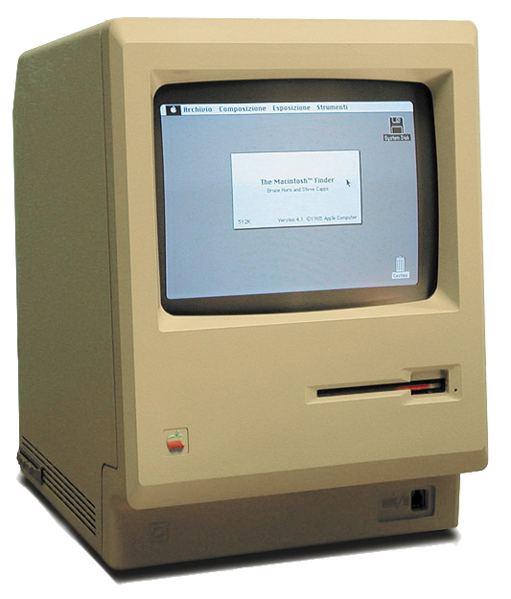
Bagaimana Apple boleh berjaya sedangkan yang lain masih bertatih-tatih? Untuk memahaminya, kita perlu kembali ke zaman ketika Apple sedang berputik. Dekad 80-an dan awal 90-an merupakan di antara detik-detik paling kritikal bagi Apple, dan melonjaknya atau tersungkurnya syarikat ini bergantung kepada sebuah kotak berwarna kelabu yang kini dikenali sebagai Apple Macintosh.

Sumber: Wikipedia
Bagi ramai orang ketika itu, komputer sering sesuatu yang dikaitkan dengan kerja-kerja saintifik. Jarang sekali komputer dijumpa di luar makmal-makmal. Malah dunia perniagaan masih belum melihat komputer sebagai satu keperluan. Tidak  kurang juga yang berpendapat komputer adalah satu alat yang sangat sukar untuk digunakan.

and you wonder why linux is not more popular with the masses... - _MG_2104.dcraw
Contoh rupa command line (sumber: sean dreilinger)
Antara muka menggunakan command line yang memerlukan pengguna untuk menaip setiap arahan kepada komputer. Tidak hairanlah jika ada yang menganggap komputer zaman itu sebagai sebuah mesin taip yang lebih canggih.

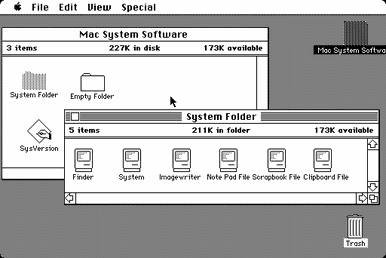
Apple Macintosh boleh dianggap sebuah game-changer kerana ia memperkenalkan beberapa inovasi yang belum dilihat sebelum itu. Sistem ikon dan tetikus Macintosh jauh lebih senang digunakan berbanding sistem command line, dan juga jauh lebih mesra pengguna. Pendekatan Macintosh lebih kepada grafikal dan bukan tekstual seperti ada pada komputer dan sistem lain.

Sumber: Wikipedia
Apple sedar cabarannya yang sedang dihadapinya ialah perasaan gerun terhadap komputer masih menebal di kalangan masyarakat umum, dan mereka mahu mengubahnya. Itulah misi mereka. Misi yang mereka jiwai hingga ke tahap mengangkatnya sebagai satu misi dari Tuhan. Kumpulan yang bertanggungjawab membangunkan Macintosh bekerja dengan sepenuh hati kerana ini. Mereka tidak dibayar dengan gaji yang lumayan. Lagi pun Apple ketika itu masih setahun jagung. Apa yang mahukan ialah "sebuah komputer yang kami sendiri mahu gunakan." Matlamat yang tepat, ringkas tetapi sarat.

Pengguna komputer hari ini banyak terhutang budi dengan Macintosh dan Apple serta Xerox (banyak teknologi dalam Macintosh telah dipelopori oleh mereka) kerana membawakan inovasi-inovasi yang telah memudahkan masyarakat umum untuk menggunakan komputer.

Hanya sebuah syarikat yang dipenuhi orang yang percaya mereka akan mengubah dunia akan menghasilkan sesuatu yang game-changing. Falsafah dan kepercayaan yang mereka pegang turut tersebar di kalangan pengguna produk mereka. Dengan menggunakan dan mempromosikan produk Apple kepada ahli keluarga dan rakan kenalan, pengguna Apple merasakan diri mereka adalah sebahagian daripada yang sesuatu yang luar biasa.

Setakat ini pesaing Apple hanya mampu melihat dari jauh dan berharap, alangkah hebatnya jika pengguna kita juga menggilai produk kita sebagaimana pengguna Apple menggilai produk Apple.

Sumber: GUIdebook

Monday, 24 October 2011

Ubuntu 11.10 video: now see for it yourself

Read the last entry and thought what on earth was I talking about?

Well, fret no more, good people.

The delightful folks at omgubuntu have created this lovely video about Ubuntu 11.10, which sums up the best parts about the free operating system.

Hopefully you'll be able to make sense of what I've written earlier and when you do get the chance to try out or use or install Ubuntu, you'll know how to get started.

Saturday, 22 October 2011

11.10 Oneiric Ocelot: a very much welcomed Ubuntu update


I haven't written anything in a long time about Ubuntu Linux, the other operating system I have running in my machine. The latest version, 11.10 (codenamed Oneiric Ocelot), was released a several days ago, and which I am right now testing and so far liking a lot.

Why another operating system?, you may ask.

I'm running Windows 7 as my main operating system. My experience of using it for nearly a year has been good. I think it's the most polished version of Windows released so far.

As for Ubuntu 11.10, for a lack an original thought at the moment, is also the most polished version of Ubuntu yet.

The main reason why I started using Ubuntu was its cost,  which is zero ringgit. After I reformatted my old machine, I installed Windows XP and Ubuntu side by side (can't remember which version exactly, but I'm guessing it was 8.04 Hardy Heron). That turned out to be huge help when my Windows XP refused to work because I changed the motherboard. I tried to be a good customer by using original software, but when my hardware went kaput and had to replace it, my original software won't let me. Thanks a lot, Microsoft.

And thanks a million to God Almighty, Ubuntu allowed me to still open my documents and play my media files. So for about a year or so back then (was it really that long?), I was most on Ubuntu Linux, upgrading it whenever a new release was available. One upgrade usually takes me nearly a whole day through Streamyx but only a few hours using 3G.

Source: Wikipedia

Since release 11.04 earlier this year, Ubuntu uses a new user interface system called Unity. Visually, Unity is eye catching. It's one way to impress your friends and family, especially if they are long time Windows users.

I still haven't gotten used to how whenever I minimise any window, it disappear into the left side of the screen, and not at the bottom of the screen in Microsoft Windows. This isn't a bad thing actually since the same happens in Windows if set our taskbar to autohide, and the taskbar can positioned to the left if we want. However I kept finding myself losing track of which window did I open and where is that window that I wanted to close earlier? Turns out the solution for this was the good old Alt and Tab keys combo.

Unity takes a little getting used to. And actually the same goes for all operating systems being developed right now. We're witnessing the dawn of touch-based interfaces, which effectively makes some features we're so used to all this while obsolete. The developers are trying to balance the needs both of current desktop users and the growing touch-based device users. Even Microsoft is working hard on this with their Metro project.

There are many reason to get on board the Ubuntu train. Every Ubuntu users gets a free 5GB of free storage on the Ubuntu One. Ubuntu and most of the software on it are downloadable free of charge available the Ubuntu Software Centre, a centralised approach to managing software in Ubuntu, which I think something Windows should have. And social-addicts will love Ubuntu's built in social app.

In my opinion, Ubuntu is on its way to mainstream acceptable, though not quite there yet. To reel in the casual user crowd,  Ubuntu needs to fully embrace the 'don't make the users think' paradigm. I would love to be able to add new software to my Software Centre without fiddling with the PPAs. And if there are many people reading this thinking, what on earth is a PPA?, then this is another reason why we the casual, non-technical users need a simpler Ubuntu.

By the way, oneiric means dreamy or dream related, and this is how awesomely cute an ocelot is.

Source: (again) Wikipedia

Monday, 17 October 2011

Bermula dan Berakhir

Sumber: Blog Izyan Hazwani

Sudah lama saya ingin meneroka sastera Timur Tengah. Namun memandangkan penguasaan Bahasa Arab saya yang lebih lemah daripada seorang murid PASTI atau Genius Aulad, saya tidak banyak pilihan selain beralih kepada terjemahan Bahasa Melayu atau Bahasa Inggeris.

Kata seorang kenalan yang juga seorang penterjemah, salah satu tanda tanda terjemahan yang baik ialah apabila naskhah tersebut dibaca, ia seolah-olah ditulis dalam bahasa terjemahan. Saya sendiri menjadi terlupa yang saya sedang membaca sebuah novel Arab, bukan novel oleh penulis tempatan. Saya amat kagum dengan terjemahan novel Naguib Mahfouz Bermula dan Berakhir oleh Shamsuddin Jaafar. Di tangan beliau, novel setebal 622 halaman ini berjaya dibawakan secara intact.

Novel ini mengambil tempat di Kaherah sekitar Perang Dunia Kedua. Kematian seorang kakitangan kerajaan bernama Kamel Affendi 'Ali secara tidak disangka telah mengheret ahli keluarganya yang masih hidup ke lembah kemiskinan. Dahulu mereka dihormati, kini mereka dipinggir.

Masalah yang membelenggu keluarga ini sebenarnya bukan disebabkan oleh pemergian almarhum. Sebaliknya pemergian beliau telah menggugurkan hijab yang selama ini menutup mata isterinya Samirah dan keempat-empat anak mereka terhadap siapa diri mereka sebenarnya.

Hassan selaku anak sulung lebih selesa berfoya-foya di kedai kopi dan bergelumang dengan dunia jalanan. Tanggungjawabnya cuba ditebus dengan wang yang diperolehi secara haram dan kata-kata manis yang diharap akan meredakan hati ibunya. Anak kedua, Nafisah, terpaksa menebalkan muka mencari rezeki dengan menjahit baju, satu vokasi yang sering dianggap tidak padan bagi anak seorang pegawai kerajaan. Nafisah memekakkan telinganya demi ibu dan dua orang adiknya, Hussein dan Hassanein, yang masih bersekolah.

Mulanya saya membayangkan novel ini sebagai sebuah drama bersiri Arab Mesir, dengan plot yang tragis dan watak-watak yang bertimpa-timpa malangnya. Plot novel ini amat ringkas tetapi gaya penceritaan Naguib Mahfouz yang berjaya mengangkatnya daripada tahap sebuah novel biasa ke tahap sebuah novel sastera. Setiap ahli keluarga ini menghadapi pemergian Kamel dengan cara yang berlainan. Pilihan yang setiap mereka ambil untuk menghadapi tanpa hidup tunggak keluarga untuk menaungi mereka telah menjadi pemangkin metamorphosis peribadi yang telah membawa mereka ke jalan-jalan kebaikan dan juga kejahatan.

Semakin dekat saya dengan penghujung novel ini semakin jelas saya melihat bagaimana novel ini membantu melayakkan Naguib Mahfouz untuk menerima Hadiah Nobel bagi Kesusasteraan pada tahun 1988. Sebahagian daripada harapan saya terhadap novel ini tidak tercapai tetapi saya tidak terkilan, memandangkan zaman ketika ia ditulis. Selebihnya berjaya dipenuhi sekadarnya. Dua bulan lebih dan 622 halaman yang sukar dilupakan.


Tuesday, 11 October 2011

Dinged the universe, he did


Mr. Steve Jobs, the former CEO of Apple, passed away last week. He was 56.

To call Jobs fascinating is probably an understatement. Many things about him, from his usual sweater-jeans-sneakers ensemble to the way he runs his company, defy common wisdom. One of the last innovation he help developed, the iPad, was ridiculed by many observers when it was first introduced. Many year before other companies have tried to make the tablet PC market work. And failed.

By March 2011, 11 million units of iPad have been sold and now the industry is running to catch up with Apple in a market that was once considered unlucrative.

I'm not a fan of his management style and his perfectionist approach. His style clearly works but I don't see it as a management or leadership model that other people can easily emulate. Or should emulate.

I can't elaborate much on this because most of these are from unverifiable sources. Furthermore, the man has passed on. It's only proper to be respectful.

What I can say is Jobs isn't too big headed to even kill off his own ideas when they turn out to be a bad one. Case in point: the Power Mac C4 Cube.

I'm sure I'm not the only person who thinks we'll never find another CEO like him. But then, maybe we don't need to.

Here is his former business partner, hacker, and Apple co-founder, Steve Wozniak, (the other Steve) paying tribute to Jobs. I can only hope that my friends would say nice things about me after I'm gone, as did Wozniak. And to leave the universe dinged, for the better, as did Jobs.

Tuesday, 4 October 2011

Lelaki bandar, wanita kampung

Rumah tangga adalah sekolah baru bagi diri saya. Melalui isteri saya dan keluarga beliau, saya mengenali sudut-sudut baru masyarakat yang sebelum ini saya hanya dengari atau lihat dari jauh. Melalui perkahwinan, saya kini mempunyai pertalian dengan mereka.

Mereka yang saya maksudkan adalah orang kampung.

Saya adalah anak bandar. Inilah takdir Tuhan ke atas saya. Sejak lahir, saya dan keluarga mengikut ke mana sahaja Abah diarahkan bertugas. Hampir kesemua pejabat tempat Abah bertugas terletak di pekan atau di bandar. Pengalaman kehidupan kampung saya terbatas kepada waktu saya bersekolah rendah dahulu, mengikut kawan sekelas untuk turun ke sungai untuk menangkap ikan, mengorek pasir pantai untuk mencari remis, dan bersiar-siar di jalan-jalan kampung dengan berbasikal. Semuanya tercatit dengan indah di dalam kenangan saya.

Kini saya suami kepada seorang wanita yang menganggap dirinya wanita kampung. Jiwanya sebati dengan suasana masyarakat yang saling bertegur sapa dan bertukar-tukar hidangan, udara yang segar dan nyaman, kokokan ayam di waktu pagi, dan ladang dan kebun tanaman kontan. Sejauh mana dia mengikuti saya, hatta ke penghujung dunia, kampung itu tetap di dalam jiwanya. Takdir Tuhan ke atas dirinya berbeza daripada diri saya.

Tuesday, 27 September 2011

Mat Som

Source: kcbmanyala
I was in primary school when Mat Som came out. During that year end school holidays when my parents went for umrah, I was at my grandmother's in the kampung. In between the trips to river and the paddy field, I would reread Mat Som countless times, even when I didn't understand parts of it.

When I reread it recently, those parts finally made sense.

The 80s I remember from the movies and TV dramas is filled with young people from the kampung trying to make it in the big city. Kuala Lumpur, in particular. Mat Som is no different. He left his idyllic kampung in Perak for shot at becoming a reporter at a big name newspaper company.

There comes a stage in life when a man must make something out of himself. Basically, to stop leeching off the parents and to stand on one's own feet. And be a good Muslim, of course. Mat Som finds that stage to be his present. And so do I.

Often times "making it" means "get ready for a rough start." Without a permanent job, Mat Som makes his way by sending in pieces and waiting for the cheque to clear at the end of month. If that doesn't happen soon enough then it's a trip to the pawnshop. Out of kindness, his childhood friend So'ud's lets him crash at his rented setinggan house. In short, nothing to write home about.

Until home writes to him.

Like thunder on a clear afternoon, his father tells him to consider marrying Wan Faridah, the daughter of his close friend. They grew up together but Mat Som's memories of her isn't exactly fond. Meanwhile, his attention seems to be diverted towards Yam, a girl in his neighbourhood, for reasons he himself couldn't quite fathom. He keeps running into Yam but his conversations with her remains one sided and in his head only.

Mat Som was adapted into a movie by Hatta Azad Khan, with Imuda as the lead and Tiara Jacquelina, in probably her first major role, as Yam. I can't think of anyone else who could do justice to the character other than Imuda, although I did picture Mat Som more as a short dude and reasonably well-dressed as depicted in drawing by Lat. Imuda is not just an actor; he's done plays, drew cartoons for Gila-Gila and Dewan Pelajar, and is also a painter.

Mat Som is more than a comic; it's a testament of Lat's love for the arts. If you know your sasterawan and seniman, you'll be thrilled to see people such as Pyan Habib, Usman Awang (Tongkat Warrant), T Alias Taib and Ramli Sarip making their camoes appearances, either drawn or mentioned or both. There's even a funny scene between Mat Som and Lat's former boss, legendary editor and novelist A. Samad Ismail, which tempted me to conclude that Mat Som is semi-autobiographical, a recollection of his earlier days as a reporter at the New Strait Times.

Mat Som shaped my thoughts about how life as an adult would look like and I believe am now a better adult because of it. It's a real shame that Mat Som is not widely known or not widely read as Kampung Boy. Another shame is the sloppy design work done on the English translation. I would love to see Lat and the publisher redesign the English version (the one with the blue background on the cover) and for Lat to draw more stuff like this.

Tuesday, 6 September 2011

Preview: Usagi Drop


Although it's been quite some time since I last wrote anything about anime, it's not because I've given up watching anime. Not yet, anyway. It's because I haven't found anything worth writing about. There's a couple of reasons for that, and the main one is I'm no longer a teenager. Most anime cater for the younger crowd, and I want more than the usual giant robots and high school love triangles.

Which is why I find Usagi Drop a breath of fresh air.


I was initially reluctant to watch it because of the rumours about its ending. It's a controversial one to say the least, feel free to Google it if you wish. The manga it's based on ended earlier this year, and myriad of reactions ensued. I snooped around a few anime discussion boards before deciding to the first episode a try.

And I'm glad I did. I found a lot of things that resonates with current stage in life. The lead character, Daikichi, is also about the same age as me. I think this is the first time I found myself actually relating to an anime character.

Much of Usagi Drop is grounded in reality. Daikichi is a regular middle class, working guy whose grandfather passed away recently. He gets ready to attend the funeral, and is greeted with a surprise at the doorstep in the form of a six-year-old girl.


The girl is introduced as Rin, the illegitimate daughter of Daikichi's late grandfather. As preparations for the funeral goes underway, Daikichi notices that everyone seems to avoid talking to or about Rin. The whole thing is understandable since the idea of an octogenarian fathering a small child is a tad squeamish for some people to accept. And compounding the confusion further is the fact that Rin's biological mother is nowhere to be seen.

Daikichi makes several efforts to reach out to Rin, and in doing so gains her trust. He begins to sympathise with Rin who's too young to understand the situation she's in.


When the family finally sits down to discuss about Rin, things get a little heated. Nobody seems ready to welcome Rin into their home, and somehow perhaps due to confusion and embarrassment, the big picture is lost on everyone, except for Daikichi. He stands up, calls out to Rin and asks if she wants to go home with him, leaving everyone with their jaws on the floor.

Daikichi is single and living alone, and as the story has reveals even he realises that taking in Rin would severely affect his chances of finding a girlfriend.

I must say that I really admire Daikichi's guts. A character like him is rare in anime (heck, even in real life!), and this is reason enough for me to sit and watch till the end, no matter how it's going to end.

The next few episodes finds Daikichi making several important, life-changing decisions, including taking a demotion, as he hopes to spend more time with Rin at home. Having a child changes our life in huge ways. I suspect when one day I have one of my own, I'd be pondering over similar issues. I wonder too about whether there are young men like Daikichi out there, who'd selflessly give up the pleasures of the single life in order to care for somebody else's child. (And in Daikichi' case, the child is his own aunt!) I really hope do they exist.

Yeah, I know I'm starting to get all sentimental. Because, hey, I'm a 30-something-year-old anime fan. I'm supposed to.


Saturday, 3 September 2011

Salam Aidilfitri 1432H Maaf Zahir Batin, walaupun hari ini sudah 5 Syawal

Balik kampung baru-baru ini membuatkan saya offline untuk beberapa hari, tanpa Internet sama ada berwayar atau tanpa wayar. Kampung saya agak dalam. Capaian Internet di sana masih rendah walaupun jiran kami dengarnya mempunyai WiFi. Saya mengambil peluang ini untuk melupakan seketika aktiviti menulis blog, berinteraksi di FB dan menyemak inbox emel.

Nyaman sekali rasanya.

Nyamannya udara desa.

Nyamannya mata memandang saujana luas.

Nyamannya beroffline.

Sekali-kala berdetik di hati, bagus juga kalau saya ada sebuah Blackberry atau iPhone. Cepat-cepat saya pejamkan mata. Saya menyedut udara nyaman desa dalam-dalam. Bau kuih dan lemang menyerbu rongga hidung. Bunyi mercun bola meletup, hilai ketawa sanak saudara, dan suara kanak-kanak bermain berlegar di kelopak telinga.

Lagi pun Internet tidak akan merudum tanpa saya.

Salam Aidilfitri 1432H Maaf Zahir Batin, walaupun Syawal sudah masuk hari yang ke-5. Sama-samalah kita puasa enam Syawal, dan bak pesan Ustaz Zaharuddin, lebih baik jangan hebah-hebahkannya.

Wednesday, 24 August 2011

Lessons of the Crusades and the Mongol Hordes

Lessons of the Crusades and the Mongol Hordes: Salahuddin al-Ayyubi and his Successors is a slim volume, just several pages short of a hundred pages. It's actually two chapters from another book, Saviours of Islamic Spirit (Volume I), by respected scholar Syeikh Syed Abul Hassan Ali Nadwi, who think also wrote Riwayat Hidup Rasulullah SAW, one of the noteworthy books I read back in 2008, and in my life so far.

This books brings to our attention two pivotal events in the history of Muslim ummah; Salahuddin Al-Ayubbi's recapture of Palestine during the Third Crusade from the hands of the Christians, and the invasion of the Mongols which ignited the fall of the Abbasiniyyah dynasty. In short, one about Muslim being victorious and another about Muslim defeat.

I admit I don't know much about Salahuddin Al-Ayubbi, other than him being considered one of the greatest Muslim heroes. Reading this book made me understood why he deserve the respect and reputation. Salahuddin (better known in the West as Saladin) was in a do-or-die mission to defend Islam against the combined forces of the Christian Crusaders. When the Christian army conquered the Jerusalem, the population were slaughtered in the streets and in their homes. It was an opposite scenario when Salahuddin took control. He pardoned the enemy soldiers and allowed them to leave unharmed. This one reason why Salahuddin is revered even by Western historians.

That doesn't mean Salahuddin's soft-heartedness is misplaced. He executed the Reginald (Rayland) of Châtillon because of Reginald's plans to attack the Holy Cities of Makkah and Madinah and wanting to take the body of Rasulullah SAW from out of his blessed grave.

He also was once moved to tears by the plea of a Christian Frank mother whose baby was kidnapped and sold in the slave market. Salahuddin helped the mother until her child was finally found.

In the battlefield, Salahuddin was described as,
... a bereaved mother... who had been deprived of her only child by the cruel hands of Death. He could be seen trotting on his horse from one side of the battlefield to another, exhorting the people to fight for the sake of Allah. He would himself go round all the detachments, with tears in his eyes, asking people to come forth for the aid of Islam.
If Salahuddin's story is something we could be proud of, the story of the Mongol invasion is certainly a cautionary one.

The Mongol invasion didn't occur without any blame on the part of the Muslims. It was a time when Muslims had failed to uphold the commandments of Islam and Muslim societies had decayed socially, spiritually, and morally. The Khalifah of the day were paid obeisance by having the subjects put their forehead on the ground, an act forbidden even for Rasulullah and reserved only for the worship of Allah.

And the event that triggered the first Mongol attack was the murder of a envoy of Mongol merchants by Muslim ruler Khwarism Shah. He suspected that there were spies among them, and the surviving members of the envoy immediately went to Genghiz Khan, seeking justice. And justice came swiftly and severely for the Muslims.

What followed was so horrific that even the historical scholars couldn't bring themselves to describe, although they did so in the end, omitting the gory and possibly unnecessary details. (Unnecessary because, in my opinion, it would describing the tarnishing of the honour of many Muslims. In the Shariah point of view, protection of the honour of individuals is a must and an aim.)

But Islam didn't disappear by the swords of the Mongol, or the Tartar people, to be exact. In fact, generations later (in just approximately 40 years) the Tartar discovered Islam and several prominent Tartar Mongol leaders embraced Islam, which included Tuqluq Timur Khan and Tarmashirin Khan.

One important lesson embedded in both stories is the significance of jihad. Many people, Muslims and non-Muslims, understand jihad as waging a holy war against other religions. But this entirely false. Jihad is act of striving in the path of Allah in order to keep Islam alive, particularly in the hearts and minds of Muslims. The Tartar Mongol invasion left many Muslim governments in disarray, but the faith of Islam survived due to the efforts of pious and steadfast Muslims.

Tuqluq Timur Khan embraced Islam after a conversation with Syeikh Jamaludin, a teacher from Bukhara who accidentally trespassed on a land that belonged to him. Syeikh Jamaludin was caught and brought before Tuqluq. Tuqluq pointed to his dog and asked whether the Syeikh thinks the dog or the Syeikh himself is more noble. When Tuqluq learned that Syeikh and his travelling party were Persian people, he insulted them by saying that a dog is worthier than a Persian. To Tuqluq's surprise Syeikh Jamaludin answered, "Yes, if we had not the true faith, we would indeed be worse than dogs." Another source quoted Syeikh Jamaludin saying something similar, "If I pass away from this world with my faith intact, I would be better than the dog. If not, the dog would be better than me." The word faith shook Tuqluq so much that he had to know more about it and in doing so he found iman and Islam.

Salahuddin's role as a Muslim general and defender is an example of jihad in a time when brutal enemies are threatening the sanctity of Islam. It wasn't a time for round table negotiations. Like I said earlier, it was a do-or-die mission.

At the time when Muslims are weaken militarily, as shown in the days beyond the Tartar Mongol invasion, jihad is still a necessity. If the spirit of jihad had died in the hearts of Muslims at the time including Syeikh Jamaludin, even we wouldn't be Muslims today, let alone Tuqluq Timur Khan. Syeikh Jamaludin also defended Islam and his act is definitely an act of jihad. No swords unsheathed and not a drop of blood spilled.

As the current Muslim generation, we need to seriously ponder about our situation, as we are still in the cross hairs of people who wish to see Islam obliterated. The challenges that come our ways appear in many guises. The desire for jihad or the struggle for betterment should be in our heart and the heart of all Muslims.


On a separate note, I wonder if someone at the book's publishing company thought Photoshopping the face of George W. Bush on a picture of a crusader (I think) on the book's cover would be a good marketing idea. I don't know. Maybe. I only noticed it a few days after I bought it. (Is that really G. W.? I don't know.)
Related Posts with Thumbnails
 
Copyright 2009 introspector. Powered by Blogger Blogger Templates create by Deluxe Templates. WP by Masterplan