Pages

Monday, 31 December 2012

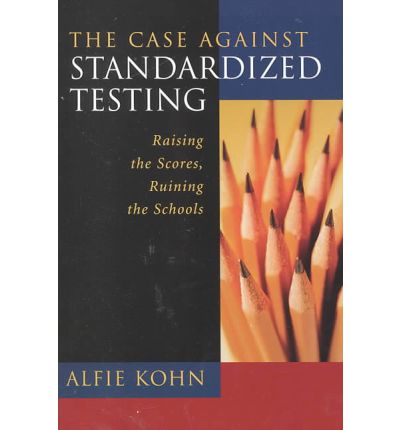
The Case Against Standardized Testing

Source: The Book Depository
Standardise examinations is a big part of the Malaysian education system. After 11 years studying in the mainstream public school, it's hard for me to imagine a different kind of  education system, one that doesn't make you sit for examinations every now and again.

Standardised examinations or testing is aimed at measuring the performance of every student using a set of standardised criteria. Students are given the same test papers with the same set of questions and same level of difficulty. Preferably the test should be given at the same time and place. Standardised testing is often perceived as a fair way of measuring students' performance.

This perception has gone largely unchallenged by society and even experts. We sat through The SPM (Form 5), PMR (Form 3), and UPSR (Year 6) examinations and have come to accept them as part of life.

Educationalist Alfie Kohn argues in his book, The Case Against Standardized Testing, that standardised assessment is not the best way of measuring students' performance. As he lengthily explains, standardised examination does little to prepare students for life real. For example, we're not allowed to ask other people for answers during examinations. In real life, especially in the workplace, we need to, in fact have to, consult our superiors, peers, subordinates, and experts whenever we're finding answers to our problems. With too much emphasis on examinations, we may overlook the importance of teaching students problem solving skills.

Standardised examination also suffers from a 'paradox of fairness.' We'd like to believe that every student have an equal chance of doing well in the examination. This is couldn't further from the truth. Kohn cites a number of studies done on the effect of the students' socio-economic status on their achievement. Students from minority group, rural, and lower class income families often do not have the same access to opportunities and assistance as the rest of the school. They often end up doing poorly in standardised examinations. The same thing is happening here in Malaysia.

There is a list of other concerns that Kohn addresses here, some of them are issues related to the US education system. It's a book that will make parents and educators re-think relevance of examinations and value of their examinations result.

With some experience in the teaching profession, I know how students can learn to beat the tests. Once they become familiar with the tests' pattern, the validity of the tests become suspect. Basically, the tests have become a complete waste of time because they are no longer measure students' understanding. Just like how a expert liar can bluff his way through a lie detector test.

The good news is there are other forms of assessment that can help our students develop a balanced and holistic skill set. Portfolios and projects show a clearer picture of what the students have learned and their progress, compared to looking at test scores alone. In fact, teachers and parents can actively participate in the students' learning process. They can ask the students critical questions about their work and listen to their responses and level of enthusiasm.

According to the recently announced Malaysia Education Blueprint 2013-2025, development of the students' creativity and leadership skills has been made part of its Shift 1. This will done by revamping examinations and putting more focus thinking skills. Although this is certainly a commendable move, does this means standardised examinations is here to stay?

We'll just have to wait and see.

Thursday, 20 December 2012

Kaedah Mendidik Isteri dan Anak

Sumber: bukuonline2u.com
Kaedah mendidik dengan memukul memang dibenarkan oleh Islam.

Pada masa yang sama, istilah memukul itu mengingatkan saya kepada perkataan seperti hayun, belasah, hentam, lanyak, balun, bedal, sebat, dan sebagainya. Di kalangan masyarakat Melayu kita pun kaedah menangani anak-anak dengan tali pinggang, tapak tangan, dan sebagainya bukanlah aneh mana.

Ibubapa saya sendiri tidak membiasakan saya dengan hukuman fizikal. Sekali sekala dirotan memang pernah. Dan sekarang tiba giliran saya pula menempuh fasa membina keluarga. Persoalan kaedah memukul anak ini mula berlegar-legar di dalam kepala.

Saya cuba mencari jawapan persoalan melalui buku Kaedah Mendidik Isteri & Anak: Antara Galakan dan Larangan Memukul dalam Islam. Penulisnya, Abdul Rahman Mohamed, berpengamalan dalam menguruskan masalah keluarga Muslim, khususnya di Singapura. Peningkatan kadar masalah keluarga Muslim telah menggesa beliau untuk membincangkan isu ini.

Ada beberapa keadaan tertentu di mana memukul dibenarkan dalam Islam. Misalnya isteri yang nusyuz. Pukulan hanyalah langkah terakhir dan tidak boleh mencedarakan, sekadar untuk menunjukkan ketegasan dan bukan untuk menunjukkan kekerasan.

Sebenarnya saya berharap untuk mengetahui secara lebih mendalam tentang memukul dari perspektif Islam. Buku ini mengejutkan saya sedikit kerana kupasannya lebih banyak kepada soal kepimpinan dan pengurusan di dalam rumah tangga.

Maksud penulis sebenarnya bukannya untuk menggalakkan para pemimpin keluarga untuk mencapai batang rotan setiap kali timbulnya masalah. Yang lebih penting ialah persiapan para pemimpin keluarga dalam menggalas tanggungjawab mendidik. Semua ini bermula dari dalam diri para pemimpin keluarga. Contohnya, kalau ibu bapa yang ingin menjadikan anak mereka  penghafaz Al-Quran, mereka sendiri perlu terlebih dahulu menyemai rasa cintakan Al-Quran dalam diri mereka.

Pendidikan isteri dan anak secara hakikatnya bermula dengan pedidikan diri sendiri. Renungilah ke dalam diri sebelum membiarkan tangan menghayun rotan.

Sunday, 2 December 2012

The “Don't Be Sad” Diaries #2

Source: Ammar Books & Audio

Initially I wanted to start a series of entries based on this book. But lately work has gotten the most of me, and I'm unable to concentrate on what the book offers. I am... sad... to have to put this book aside and pick up other books. Because not reading can lead to sadness.

Thursday, 18 October 2012

The “Don't Be Sad” Diaries #1

You're reading La Tahzan, brother? My Ghanaian colleague inquired. I was on my out of our office, clutching the book in my right hand and the rest of my belonging in the other.

Yes, I answered, slightly surprised. I didn't realised that people were paying attention to what I was reading.

Aaidh Al-Qarni. It's a good book, masya-Allah.

Yes, I've only just started.

A good book it is. Don't Be Sad, or it's Bahasa Melayu translation, Jangan Bersedih, is quite the best-seller, from what I gather. It's a self-help book for Muslims that tackle issues both in life right now and life later in akhirah.

This is actually my second attempt to read this book. The first time I read it a years ago, I felt disconnected from Syeikh Al-Qarni's words. At the time, I suppose, I was in a very bad situation. My inner self was in turmoil. I would like to think that my inner self is in a better place right now. I hope. Because now I'm past page 80.

Source: Ammar Books & Audio

Tuesday, 25 September 2012

Positioning: The Battle for Your Mind

Source: CraveWorthy
Quickly, what’s the No.1 fast food restaurant chain in Malaysia?

No, don’t tell me the answer. Instead, I want you think about how quickly you came up with the answer? Did it took you more than a minute? Was it based on any statistics?

I’m guessing no and no, right? Because that, my friend, is the power of positioning. Positioning is powerful concept that make or break a company or a product, as this book claims.

I remember attending a writing workshop a few years back. The speaker was constantly asking attendees, who were hoping to get published, to think carefully about positioning. The book market(s) can get crowded very quickly. Publishers aren’t keen to sign up an author unless he or she has something unique to offer.


This is the reason why Pak Latip (Abdul Latip Talib) pretty much rules the local historical novel market. He certainly wasn’t the first local author to write in this genre. But he was the first to successfully market historical novels, a genre that may have been deemed by some published as unprofitable.

He also continues to write historical novels, instead of trying his hand at any other genres. By doing so, Pak Latip is cementing his place in the market, and more importantly in the minds of the readers.

Being the first means he’s going to the one who set the bar. If a new historical novelist gets published, it’s likely that people will ask, is he as good as Pak Latip? If that is the case, then the new historical novelist has no choice but to be better. Or different.

Positioning is not about being the first, it is more about not be overlooked by customers who are overwhelmed by the choices available in the market. Good positioning means getting through to the customers’ mind.

Companies with already good positioning can make mistakes that leads to an unfavourable perceptions about themselves. The authors of this book warns leading companies from going about and telling people they’re the No.1. This type of statement makes the company sound insecure.

If people already know that you’re already No.1, there’s no need repeating it constantly. After a while, customers —people like you and me— will start going, “Yeah, so?” Customers are not dumb.

Also, being No.1 means nothing to the customers if they are treated like #!$@.

Saturday, 1 September 2012

The Master of Go


Source: Sensei's Library
First played in China over 2,000 years ago, Go long has been part of the Japanese culture. Played on a board with 19 x 19 squares, Go pieces are played black versus white, similar to chess. But unlike chess or checkers, the pieces are placed on intersections of the square in a grid-like manner instead of inside a square. Once a piece is placed, it cannot be moved. A piece that is completely surrounded is captured. The rules of Go is relatively simple but allow for a wide array of strategies. Winning involves surrounding the opponent's pieces as much as possible. The winner of a match is determined using a points system.

A Go match in progess. (Source: Wikipedia)
I know almost nothing about Go. Most of what I wrote in the last paragraph was picked up as I read this book. The Master of Go is based on an actual match —an important one— between two masters. Honinbo Shūsai, a retired Go 9-rank master, agreed to play a out-of-retirement game against Kitani Minoru of 7-rank. Ranks in Go is akin to ranks in martial arts, reflecting its holder's level of skill, accomplishment, and experience. This was Honinbo Shūsai's final official match as he passed away several months later.

Kawabata Yasunari was a reporter from Mainichi Shimbun assigned to cover the match. The match entirely spanned several months, with breaks lasting from days to weeks. The venues were changed, and moves were made after many hours of deliberations. The match became one of the most discussed Go matches in history.

Fortunately this book is not a blow-by-blow account of what happened. Kawabata wrote, or rather rewrote, the match as a "chronicle novel" or a nonfiction novel. He gave himself and Kitani pseudonyms, but clearly there was no question about the persons involved. Kitani, named Otaké in the novel, was younger than Honinbo but a formidable player no less. In 1928, Kitani beat eight opponents consecutively in a series of matches. Honinbo, whose health was deteriorating at the time, had a reputation for being pragmatic. There were instances during the match when he used the provisions of the match to his advantage. Postponements occurred, dragging the game to a point where forfeiting came into consideration. But with their reputation at stake, both masters proceeded with the intention of winning.

Reading this book with just a rudimentary understanding of Go was certainly a handicap. What made me stay to the end was Kawabata's detailed account of what happened throughout the match, the people involved, and how they revealed clues about the two masters of the game. Go was merely the stage on which a human drama unfolded.

The actual match between Honinbo Shūsai and Kitani
Minoru (Otaké) in 1938. (Source: Sensei's Library)

Sunday, 12 August 2012

Penawar Duka Pengubat Sengsara

Sumber: Karya Bestari

Allah Maha Hebat. Maha Mendengar, Maha Mengetahui. Pengabul segala hasrat.

Sebelum ini saya sedikit mengomel tentang kepupusan peluang saya untuk membaca buku yang bukan untuk tujuan kerja. Hati saya meronta-ronta mencari ruang senggang. Bukannya topik bacaan untuk kerja saya ini membosankan, malah saya sedar signifikasinya. Cuma saya sudah menyusun rancangan membaca saya sendiri, dan kerana kerja rancangan ini sudah tergendala.

Ramadhan ini saya dihadiahkan olehNya dengan pengajaran-pengajaran yang penuh makna. Satu insiden ini juga saya anggap sebagai satu pengajaran. Dua hari yang lepas saya ke kedai cuci kereta untuk membersihkan kereta yang berselimut debu. Bukan setakat debu malah terpalit kotoran lain dari pelbagai sumber. Hatta, cadang sang pakar pencuci kereta, kereta saya ini juga perlukan polish. Proses polish mengambil masa lebih daripada sejam. Ketika itu buku ini ada di dalam beg. Maha Suci Allah, peluang yang saya cari muncul tanpa diduga. Saya duduk diam di tempat menunggu. Hujung mata lembab dan tekak saya mengeras. Keajaiban Allah telah menyinggahi hidup saya.

Bonus ini saya gunakan untuk menghadam mutiara ilmu dan kerohanian daripada Tuan Ustaz Dr Asri. Penawar Duka Pengubat Sengsara mengfokuskan aspek rohani dan akidah, berbeza daripada buku-buku beliau yang lain yang ada menyentuh tentang aspek seperti kemasyarakatan, siasah dan sejarah. Puisi-puisi kerohanian Ustaz Dr Asri yang menutup dan membuka bab-bab buku ini meniupkan rasa syahdu ke dalam hati pembaca termasuklah pembaca yang berhati kematu seperti saya.

Buku ini menjawab beberapa persoalan yang sekian lama berlegar di fikiran saya, seperti pandangan Islam tentang Bonda kita Hawa dalam peristiwa pengusiran beliau dan Ayahanda Nabi Adam A.S. dari syurga. Al-Quran merakamkan peristiwa dengan meletakkan tanggungjawab ke atas kedua-dua mereka. Tidak seperti agama lain, Islam tidak menyalahkan Bonda Hawa kerana menyebabkan manusia dihalau dari syurga atau menganggap kaum wanita sebagai bahana. Yang penting untuk kita pegang ialah taubat Ayahanada dan Bonda diterima oleh Allah. Kedudukan mereka tetap mulia dan berada di kalangan yang patut kita dikasihi.

Satu persoalan lagi yang mencuit minda saya ialah tentang perkataan قلب yang selalu diterjemahkan ke dalam Bahasa Melayu sebagai hati. Terjemahan yang lebih tepat ialah seperti di dalam Bahasa Inggeris iaitu heart atau jantung. Ini lebih dekat dengan maksud قلب yang dianalogikan di dalam Al-Quran. Hati dalam bahasa Inggeris ialah liver. Menariknya, istilah heart attack tidak pula diterjemahkan kepada serangan hati tetapi serangan jantung. Begitu juga heart disease adalah penyakit jantung, bukan penyakit hati. قلب juga tidak sesuai ditulis sebagai kalbu kerana كلب dalam Bahasa Melayu ialah anjing. Oleh sebab ini saya pernah dengar cadangan agar perkataan kalbu diganti pakai dengan perkataan atma.

Tanpa saya sedar, sudah pun berlalu sejam lebih. Kereta saya tampak berkilat dan hati jantung hati saya terasa diubat. KeajaibanNya sentiasa tidak dapat diduga. Saya berazam agar doa berikut yang saya belajar dari buku ini akan menjadi kelaziman hidup saya. Jika saudara sudah pun beramal dengannya, teruskanlah. Semoga saya dapat mengikuti saudara dalam kebaikan.

“Ya Haiyyu, Ya Qayyum, dengan rahmatMu daku memohon pertolongan. Baikilah seluruh urusanku, dan janganlah Engkau serahkan diriku ini kepadaku walaupun sekelip mata” (Riwayat al-Nasai).

Monday, 6 August 2012

Membaca kerana kerja

Suka atau tidak, sebahagian besar kerja saya sekarang melibatkan membaca. Saya sangka sebagai seorang yang suka membaca, ini sesuatu yang mengujakan.

Sangkaan saya meleset. Bukan senang untuk membaca demi kerja. Berbeza dengan membaca demi minat. Bukan senang memaksa diri untuk membaca, apabila diri ‘rasanya’ memang suka membaca. Adakala saya rasa seolah-olah saya seorang perasan suka membaca, bukan betul-betul. A faking bibliophile.

Boleh jadi juga kerana kerja, apa yang ingin saya baca terpaksa diletak ke tepi. Adakah membaca demi kerja telah melunturkan keinginan membaca di luar kerja?

Kala Ramadhan ini saya mengajukan doa-doa termasuklah agar konflik ini akan berpenghujung. Kerana semakin lama konflik ini berlansung, semakin dungu saya rasa.

Sunday, 15 July 2012

Sitora Harimau Jadian

Source: Fixi
UPDATE:
 He directed 17 more movies after this, actually. But cheers!
Man, this is super-embarrassing. I was trying to get this entry out quickly without doing proper fact-checking. I admit to all factual error herein. This is a lesson for me. Thank you, Buku Fixi, for pointing out this mistake in your comment. Much appreciated. 

Sitora Harimau Jadian was reportedly the last movie P. Ramlee ever made. It was also said to be one of his worst.

After moving to Malaysia from Singapore, P. Ramlee began working at Pancha Delima Studio in Ulu Kelang. The studio was years behind the one used to work in back in Singapore's Jalan Ampas. The equipments there were dated, the staff very much inexperience. With whatever he could manage, P. Ramlee made a number a of movies that many thought were not among his best.

One such movie is Sitora. A horror feature, Sitora undoubtably suffered from technical setbacks. The special effect makeup for instance left viewers cringing, but not out of fear.

However, beneath the bad makeup is story that is genuinely P. Ramlee in its commentary and forwardness. For starters, weretigers? Whoah.

If only this were "Sitora versus some-monster-alien-etc." kind of movie. But no. P. Ramlee, being the auteur that he is, had bigger ideas.

The actual movie is said to be lost, with no working copy of it left in existence. The closest thing to the experience of watching Sitora is through the novelisation of the movie, recently republished by Fixi books, an imprint of Amir Muhamnad's Matahari Books.

The story takes place in Kampung Kiambang, a rural village in a grip of terror. Sitora, the titular weretiger, was attacking and murdering villagers, except those who paid him protection money.

Pendekar Amin, a silat teacher, refused to bow down to Sitora's demands. As a result of his defiance, his daughter became a repeated target of the mysterious being.

Enter Dr Effendi (P. Ramlee), a young aspiring doctor from the city. The idea of a weretiger was total baloney to him. As a man of science, he administered modern medicine treatment on Pendekar Amin's daughter. She was grateful, and subsequently smitten with the charming doctor.

Meanwhile, the body count continue to rise. Dr Effendi finally comes face to face with Sitora, and he finally realises there's more to this than pasty makeup. Making matter worse, Sitora turned him into a weretiger.

Sitora is an interesting take on science versus supernatural. The movie was made during a time when Malaya was on the verge of modernity. People used to go to bomohs whenever they got sick. And then came doctors in clinics prescribing pills. No pulut kuning or pengeras needed.

Tuesday, 12 June 2012

Pluto Jilid 1–8 (Tamat)

Pluto Jilid 1 (Sumber: SF Signal)

Saya pernah cerita sebelum ini tentang hadiah hari lahir termahal yang pernah saya belikan untuk diri sendiri, iaitu seluruh set manga berjudul Pluto edisi Bahasa Inggeris. Ada dua sebab kenapa saya telah borong kesemua lapan jilid sekali gus.

Pertama, kerana ia oleh Urasawa Noaki. Urasawa sebenarnya terkenal dengan karya yang berjilid-jilid panjang seperti Monster dan 22th Century Boys, yang tamat pada jilid ke-18 dan ke-22. Pluto hanya 8 jilid. Waktu saya mula-mula ke kedai, jilid pertama Pluto telah habis dijual. Lalu saya tempah senaskhah dan kira-kira dua minggu kemudian saya sambar kelapan-lapan jilid. Bimbang kalau akan ada jilid lain pula yang akan habis. Dan itu sebab kedua.

Keistimewaan Urasawa Naoki ialah beliau sangat cekap menulis cerita-cerita yang penuh dengan plot twist yang membuatkan pembaca tidak senang duduk. Semakin dekat kita dengan penghujung cerita, akan ada sesuatu yang Urasawa akan campakkan yang akan memesongkan jangkaan atau sangkaan kita tentang cerita itu. Satu lagi kelebihan Urasawa ialah keupayaan beliau dalam melahirkan rasa simpati terhadap watak-watak yang beliau perkenalkan, termasuklah watak jahat dan sampingan.

Pluto adalah penceritaan semula sebuah jalan cerita dalam siri Tetsuwan Atom (Astro Boy) berjudul Chijô Saidai no Robotto atau Robot yang Terkuat di Dunia. Tetsuwan Atom adalah karya Tezuka Osamu, yang juga dikenali sebagai Bapa Manga dan Anime.

Perbandingan di antara Chijô Saidai no Robotto (atas) dan Pluto (bawah). Sumber: du9

Dengan restu dan kerjasama dari anak mendiang Tezuka Osamu, Makoto, Urasawa mengadaptasi Chijô Saidai no Robotto dengan  memberikan watak-watak asal ciptaan Tezuka wajah dan bentuk yang lebih hampir dengan dunia yang kini. Hasilnya, sebuah cerita yang bukan sekadar menumpang kekuatan dari sumber asal tetapi mempunyai perspektif, persoalan, serta identitinya yang tersendiri.

Pluto mengambil tempat di sebuah dunia di mana manusia dan robot hidup di samping satu sama yang lain. Kehidupan harian manusia dipermudahkan dengan bantuan robot domestik. Keamanan turut dipantau oleh polis-polis robot khas. Kemajuan teknologi telah meningkatkan hubungan manusia-robot ke tahap yang hampir simbiotik.

Tidak seperti manusia, robot mempunyai jasad yang pelbagai bentuk. Ada yang kelihatan seperti kotak atau perabot bergerak, dan ada robot canggih yang begitu mirip dengan manusia dari segi rupa serta keupayaan intelek. Malah ada robot yang mempunyai pasangan hidup dan berkeluarga. Kekurangan mereka yang paling ketara ialah kemampuan untuk mengalami, memahami, dan mempamerkan emosi.

Salah sebuah robot canggih ini ialah Gesicht, seorang (sebuah?) detektif di Europol Jerman. Dia ditugaskn untuk menyiasat pembunuh misteri sebuah robot pemelihara hutan bernama Mont Blanc. Pemergian Mont Blanc yang juga simbol keamanan sejagat ditangisi ramai orang di seluruh dunia.

Pembunuhan itu disusuli beberapa kematian yang hampir serupa modus operandinya. Tiada kesan organik tubuh badan manusia seperti cap jari atau DNA yang ditemui di tempat kejadian. Hanya satu persamaan yang ada pada setiap pembunuhan; sepasang batang atau kayu atau dijumpai terpacak pada tepi kepala mangsa.

Apabila bukti dan petunjuk gagal menunjukkan sama ada pembunuh tersebut manusia atau robot, Gesicht ke Jepun untuk memohon bantuan dari seorang robot berteknologi tinggi bernama Atom. Atom mempunyai tubuh kanak-kanak dan cuba sedaya mungkin untuk hidup seperti seorang kanak-kanak normal. Inilah impiam Atom yang mungkin tidak akan tercapai.

Atom mengetahui satu rahsia yang menyayat
hati tentang Gesicht (sumber: Muttpop)

Mont Blanc, Gesicht, dan Atom tergolong di kalangan tujuh robot yang terhebat di dunia. Ketujuh-tujuh robot ini pernah terlibat dalam perang yang dikenali sebagai Konflik Asia Tengah ke-39. Selepas terbunuhnya tiga daripada tujuh robot yang dimaksudkan, Gesicht dan Atom percaya bahawa mereka bakal menjadi sasaran, dan kemungkinan besar pembunuh ini mempunyai kaitan rapat dengan konflik tersebut yang telah mengorbankan ribuan manusia dan robot.

Persoalan tentang perbandingan robot dan manusia, misalnya, menyebabkan saya terfikir. Dari satu segi, robot boleh dilihat sebagai abstraksi manusia. Saintis mungkin berjaya mencipta robot yang dapat mensimulasikan aspek fizikal manusia, namun cabaran besar masih menanti mereka di bidang emosi dan kognitif.

Bagaimana pula robot dapat mengimbangi fizikal dengan emosi? Pluto, robot pembunuhan dalam cerita ini, dikatakan mempunyai kekuatan luar biasa di samping emosi dendam yang bersemarak. Dendam ini menjadi sumber kekuatan Pluto. Manusia mampu menimbang dan memaafkan. Inilah pengaturcaraan tercanggih oleh pengaturcara teragung.

Sesuatu yang amat menarik untuk diamati idea bagaimana emosi boleh dikuantifikasikan sebagaimana berat atau ketinggian. Pluto sebagai sebuah manga sains fiksyen mengingatkan saya kepada firman Allah di dalam Surah At-Tin, tentang manusia selaku sebaik-baik kejadian. Dalam mencipta robot yang mirip-mirip manusia, aspek fizikal, emosi, dan intelek perlu disintesiskan dan diseimbangkan. Sejauh mana manusia telah sudah serta akan berjaya, hanya Yang Esa sahaja yang tahu.

Dan adakah saya akan buat sesuatu yang sebegini untuk hari-hari lahir akan datang, hanya Yang Esa sahaja yang tahu.

Pluto Jilid 8 (About.com Manga)
Related Posts with Thumbnails
 
Copyright 2009 introspector. Powered by Blogger Blogger Templates create by Deluxe Templates. WP by Masterplan